Sequencing Promotional Timelines Alongside Live Dealer Blackjack Session Lengths in Interstate Circuits
Written by Greta Krüger · Jun 21, 2026
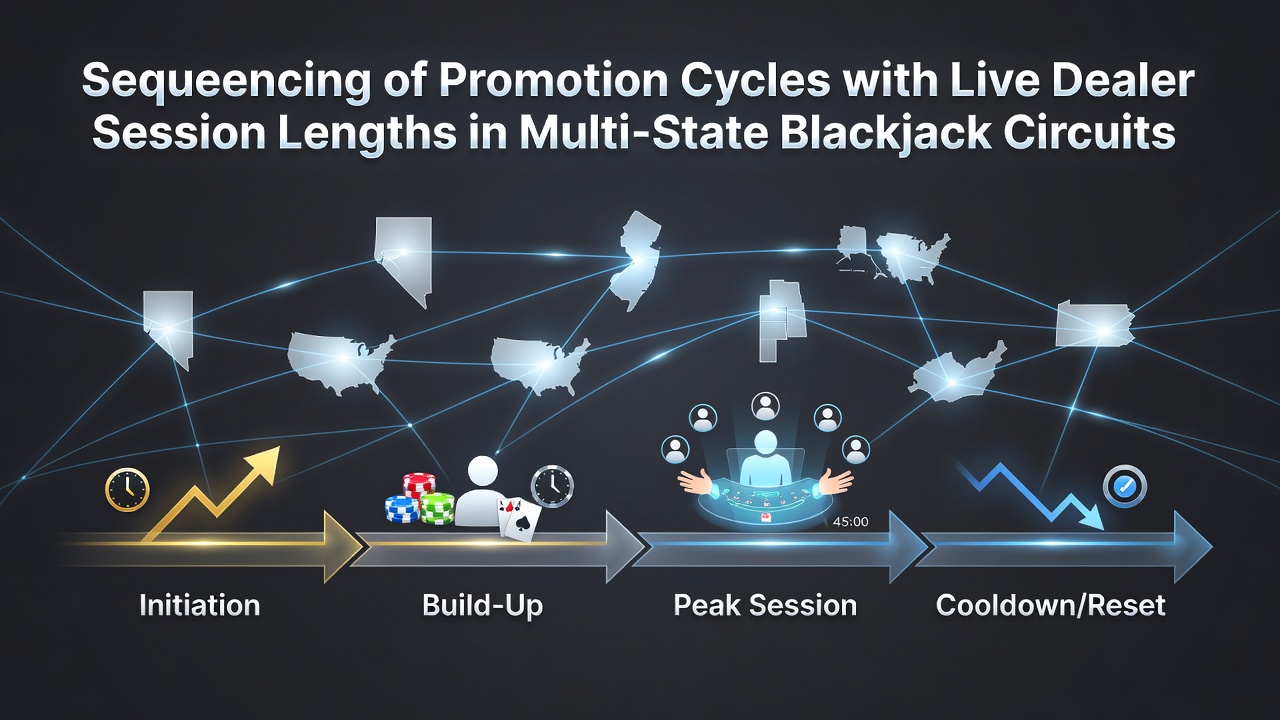
Sequencing Promotional Timelines Alongside Live Dealer Blackjack Session Lengths in Interstate Circuits
Operators managing blackjack circuits that span multiple states coordinate promotional timelines with live dealer session lengths to maintain consistent player engagement, and this coordination relies on synchronized data feeds from each jurisdiction's platform. States including New Jersey, Pennsylvania, and Michigan operate under separate regulatory frameworks, yet shared backend systems allow promotions to activate at precise intervals that match average session durations observed in live dealer environments.
Core Elements of Promotion Cycle Design
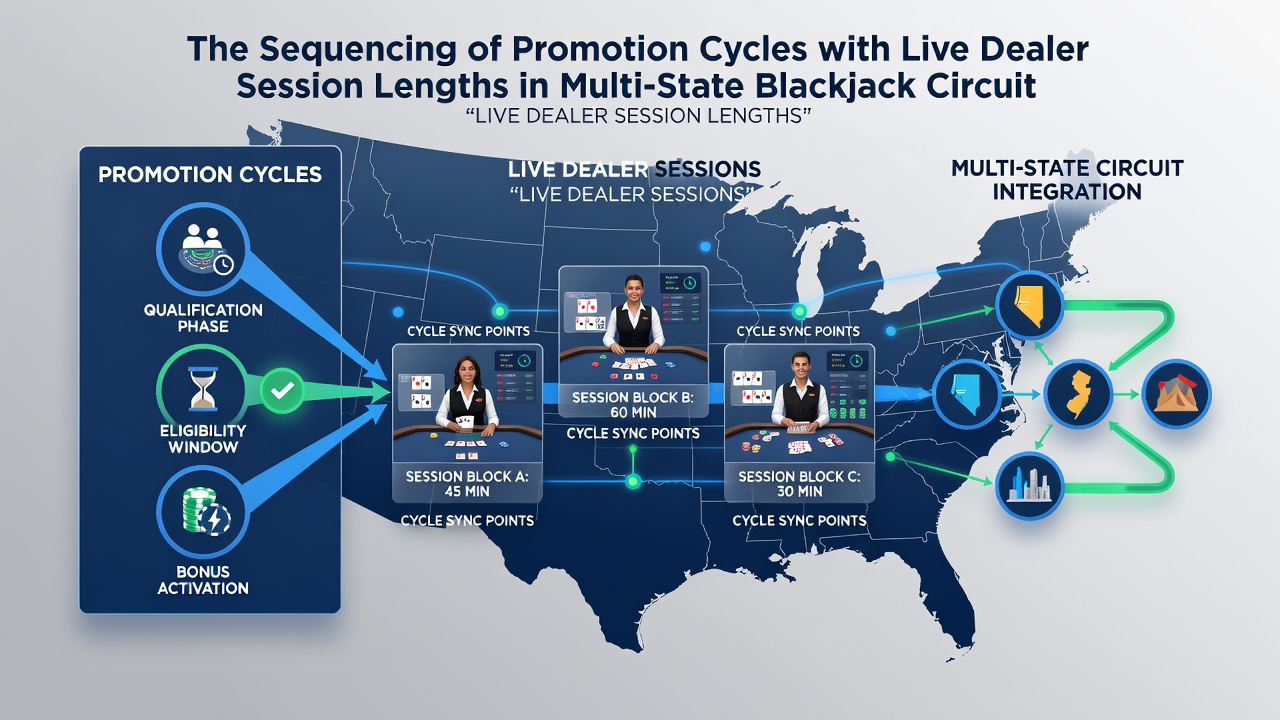
Promotion cycles in these circuits follow structured phases that include bonus triggers, multiplier windows, and reward redemptions, each timed against session metrics collected from live tables. Data shows that sessions averaging 45 to 75 minutes align with the most effective placement of mid-cycle incentives, while shorter bursts under 30 minutes receive front-loaded offers to capture initial play. Observers note that longer sessions exceeding two hours often incorporate progressive elements that scale with time spent at the table, creating natural breakpoints where new promotional layers activate without interrupting dealer flow.
Session Length Data Across Jurisdictions
Figures from multi-state networks reveal distinct patterns in session duration that influence how cycles are sequenced. In New Jersey, average live dealer blackjack sessions run approximately 52 minutes according to aggregated platform reports, whereas Pennsylvania circuits record closer to 68 minutes during peak evening hours. Michigan data points to sessions that extend further on weekends, reaching 82 minutes on average, which prompts operators to insert additional promotional checkpoints within those extended windows. These variations require dynamic adjustment so that a single promotion cycle can deliver equivalent value regardless of the state where the session originates.
Technical Sequencing Mechanisms
Backend algorithms match promotional triggers to session timers by pulling real-time data from each state's live dealer servers. When a player crosses from one state network into another mid-session, the system carries forward elapsed time and applies the appropriate remaining promotional phase without resetting the cycle. This handoff prevents overlap or gaps that could dilute incentive impact. Researchers have documented that such seamless transitions increase session continuity rates by aligning reward delivery with natural fatigue points identified in player behavior logs.
June 2026 Adjustments and Regulatory Context
During June 2026, several circuits implemented updated sequencing protocols following new compliance guidelines issued by the Nevada Gaming Control Board and the New Jersey Division of Gaming Enforcement. These updates standardized how session length thresholds trigger promotional resets across interstate links, reducing discrepancies that previously arose when players moved between platforms. The changes addressed timing conflicts that surfaced when live dealer tables in one state operated under different minimum session requirements than those in neighboring jurisdictions.
Impact on Player Flow and Retention Metrics
Retention data collected from interconnected circuits indicates that properly sequenced promotions sustain longer average session lengths without increasing player fatigue. One documented case involved a circuit linking Pennsylvania and Michigan tables where the introduction of time-synced bonus rounds extended median session duration from 61 to 79 minutes over a three-month period. Similar patterns emerged when operators adjusted redemption windows to coincide with session endpoints rather than fixed calendar dates, allowing players who joined mid-cycle to receive proportional benefits based on actual time at the table.
Coordination Challenges in Multi-State Environments
Coordinating these elements across states presents ongoing technical and regulatory hurdles because each jurisdiction maintains independent oversight of promotional advertising and session logging. Operators address this by maintaining unified player profiles that update session clocks in real time while complying with each state's distinct reporting intervals. What's interesting is how these systems incorporate buffer periods around state boundaries to prevent premature cycle termination when latency occurs during cross-jurisdiction handoffs.
Conclusion
The alignment of promotion cycles with live dealer session lengths continues to evolve as multi-state blackjack circuits expand their interconnected infrastructure. Data collected through June 2026 demonstrates measurable improvements in session continuity when timing mechanisms account for jurisdictional differences in average play duration. Future refinements will likely build on current frameworks established by regulatory bodies such as the Nevada Gaming Control Board and industry analyses from the American Gaming Association, supporting more precise synchronization across expanding state networks.