Regional Variations Influence Loyalty Point Redemption Across Online Slot and Card Platforms
Written by Viktor Simon · Jun 24, 2026
Regional Variations Influence Loyalty Point Redemption Across Online Slot and Card Platforms
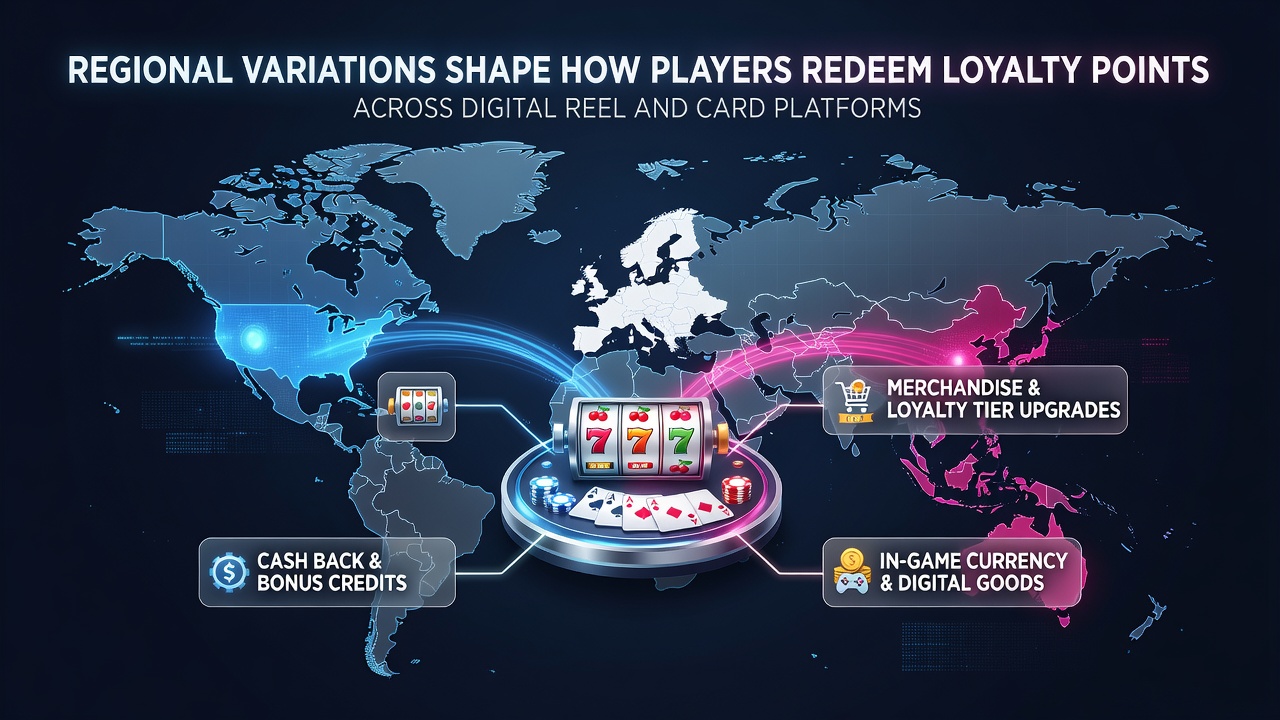
Regional regulations and player preferences continue to shape how loyalty points convert into rewards on digital reel platforms and card-based environments, with distinct patterns emerging across North America, Europe, and Asia-Pacific markets as of June 2026. Data from industry analyses reveal that redemption options range from cashback credits in tightly regulated U.S. states to merchandise and travel incentives in parts of Asia, while European platforms often emphasize free play credits tied to table games.
North American Redemption Patterns
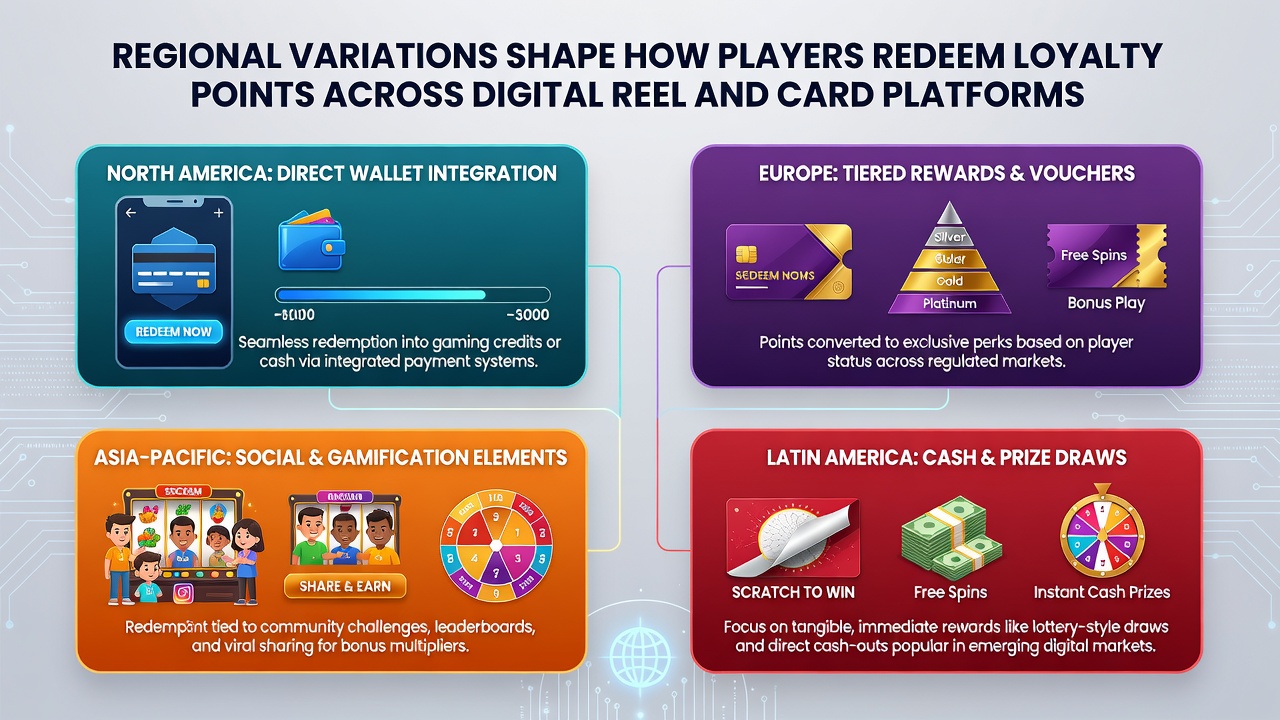
Platforms operating in U.S. jurisdictions such as New Jersey and Pennsylvania prioritize cash equivalents and bonus funds for loyalty points earned through slot sessions and video poker, according to records maintained by state gaming control boards. These systems connect reel spins directly to card game progressions, allowing points accumulated on digital reels to transfer toward live dealer blackjack tables within the same operator network. Canadian provincial frameworks in Ontario and British Columbia add another layer where players frequently redeem points for tournament entries or branded merchandise, with operators reporting higher engagement when points link across slots and poker variants.
Observers note that cross-border differences within North America create varied flows, as players in one state access instant cash redemptions while those in neighboring regions encounter restrictions that favor experiential rewards like hotel stays or event tickets. This setup encourages operators to segment their loyalty structures by jurisdiction rather than applying uniform global rules.
European and Asia-Pacific Approaches
European markets demonstrate a preference for point redemptions that feed into extended play sessions on both reel and card platforms, with many operators structuring rewards around multiplier boosts applicable to roulette and baccarat tables. Reports compiled by the European Gaming and Betting Association highlight how loyalty systems in countries like Malta and Sweden integrate points from digital slots into card game bankrolls more fluidly than in North America. Players often convert accumulated points into time-limited free bet vouchers that carry over between game types within a single account.
In the Asia-Pacific region, operators in Australia adn parts of Southeast Asia lean toward non-gaming redemptions such as retail vouchers and dining credits, especially on platforms that blend reel mechanics with card-based games like baccarat. A study released through the Australian Institute of Criminology in early 2026 documented these trends, showing that loyalty programs there emphasize tangible goods over direct gaming credits to align with local consumer habits. Points earned on digital reels frequently channel into card platform perks like priority seating or exclusive tournament access rather than immediate cash equivalents.
Key Drivers Behind Geographic Differences
Regulatory frameworks stand out as primary influences, since licensing conditions in each region dictate permissible reward types and transfer rules between game categories. Tax structures further affect outcomes, with some jurisdictions imposing higher levies on cash redemptions than on experiential or merchandise-based rewards. Platform design choices also play a role, as operators tailor interfaces to local payment preferences and cultural attitudes toward gambling incentives.
Those who've examined player data across markets observe that reel-focused loyalty systems in high-regulation areas tend to restrict point transfers to card environments unless specific compliance thresholds are met. In contrast, less fragmented markets allow seamless movement of points between slot sessions and card tables, boosting overall retention metrics reported by multiple operators.
Player Behavior and Platform Adaptations
Evidence from transaction logs indicates that players in North America redeem loyalty points more frequently for direct financial benefits, whereas European and Australian users show stronger uptake of hybrid rewards that combine gaming credits with lifestyle perks. Operators respond by developing region-specific modules within their loyalty engines, ensuring that points earned on digital reels can enhance card platform experiences without violating local statutes.
What's interesting is how these adaptations create segmented user journeys, with some platforms offering tiered redemption menus that change based on the player's registered location. Such variations maintain compliance while addressing differing expectations around value and utility of accumulated points.
Conclusion
Regional variations in loyalty point redemption continue to define player interactions with digital reel and card platforms, driven by regulatory, cultural, and operational factors that differ markedly across global markets. Data collected through June 2026 underscores the ongoing need for operators to maintain flexible systems capable of supporting these localized approaches while preserving cross-game functionality where permitted. As platforms evolve, the patterns observed in North America, Europe, and Asia-Pacific regions provide clear indicators of how geography shapes reward ecosystems in online gaming environments.