Preserving Stakes Through Dealer Shift Changes in Licensed Live Table Environments
Written by Amir Neumann · Aug 26, 2026
Preserving Stakes Through Dealer Shift Changes in Licensed Live Table Environments
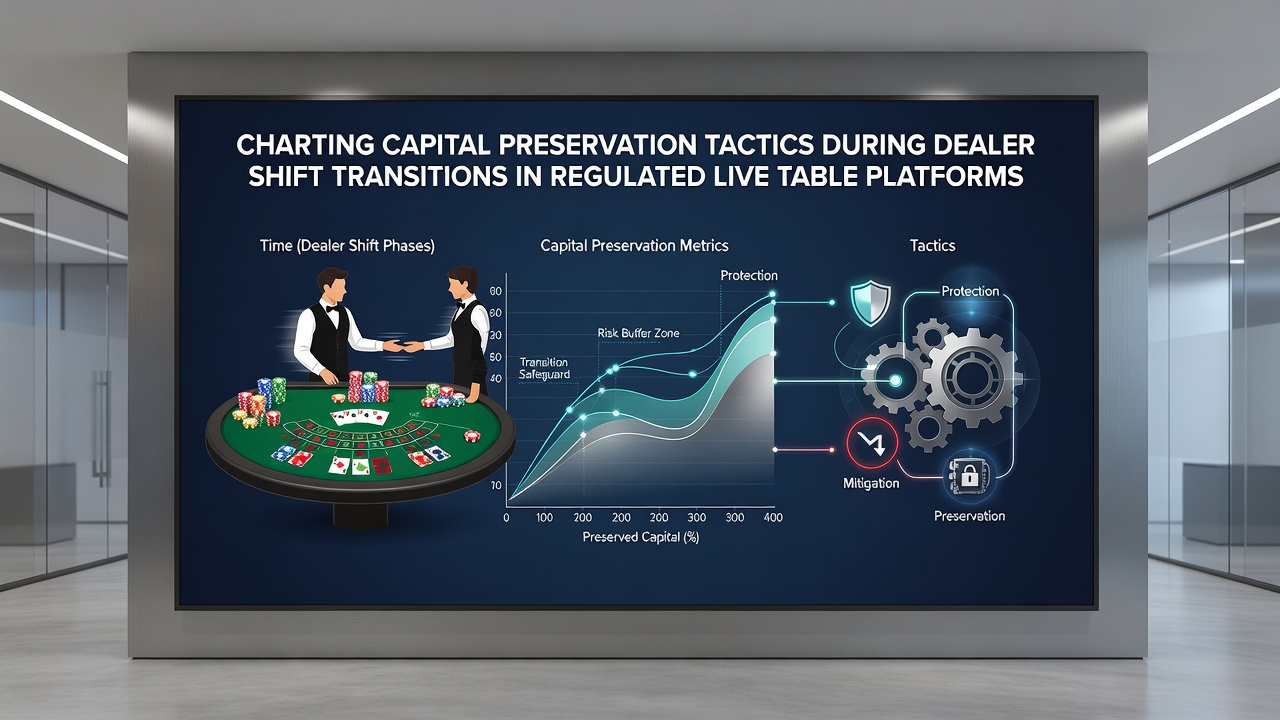
Dealer shift transitions in regulated live table platforms create brief windows where capital management requires precise timing, and operators in jurisdictions such as Nevada and Singapore have documented procedures that affect how bets resolve during handoffs. Research from the University of Nevada Reno shows these intervals typically last between 30 and 90 seconds yet influence variance patterns across blackjack, roulette, and baccarat sessions when players maintain continuous wagers. Data from the Nevada Gaming Control Board indicates platforms must log every transition to maintain audit trails, which in turn gives observers tools to track exposure during those moments.
Mechanics of Regulated Shift Protocols
Live dealer platforms licensed under frameworks like those enforced by the Nevada Gaming Control Board and the Casino Regulatory Authority of Singapore follow standardized handoff sequences that include visual confirmations, chip recounts, and system synchronization checks before new staff assume control. These steps reduce discrepancies in bet tracking, while systems automatically pause certain side bets until verification completes. Observers note that platforms integrate timestamped video feeds so regulators can review any capital movement that occurs across the changeover.
August 2026 data releases from multiple state regulators highlight increased scrutiny on these intervals following expanded live dealer offerings in additional U.S. markets. Platforms respond by embedding automated alerts that notify players when a shift begins, allowing time to adjust stake levels without disrupting game flow. Such notifications appear within the interface and connect directly to backend logs that regulators access during compliance reviews.
Identified Exposure Points During Transitions
Capital preservation challenges surface when unresolved bets remain active as one dealer exits and another enters, particularly in games that use continuous shuffle mechanisms or multi-hand sequences. Studies conducted by academic researchers at the University of Macau reveal measurable spikes in dispute resolutions tied to these periods, prompting operators to implement temporary bet limits that reset after each verified handoff. Those who've analyzed platform logs report that players who maintain steady bet sizes across transitions experience higher variance compared with those who reduce exposure by one increment during the switch.

Regulated environments address these points through mandatory system freezes on new wagers until the incoming dealer completes authentication, a process that appears in operational guidelines issued by authorities in both North America and the Asia-Pacific region. Players who monitor these freezes gain opportunities to reassess bankroll allocation before resuming normal activity.
Documented Approaches to Capital Protection
Operators and third-party analysts have catalogued several repeatable methods that align with regulatory requirements. One approach involves scaling down wager amounts by 25 to 50 percent immediately before a scheduled shift, then restoring original levels once the new dealer confirms table integrity. Another tactic relies on platform pause functions that allow participants to sit out one or two rounds without losing table position, a feature now standard in systems certified by multiple gaming authorities.
Figures released by the Australian Transaction Reports and Analysis Centre show platforms that offer granular pause controls report fewer capital disputes during transitions. Those controls integrate with player accounts so session histories remain continuous even when active betting pauses briefly. Research papers examining cross-jurisdictional data further indicate that players who combine pause usage with real-time balance displays maintain steadier overall bankrolls across extended sessions.
Regulatory Oversight and Platform Standards
Licensing bodies require detailed reporting on shift-related incidents, and platforms must demonstrate that capital safeguards function consistently across all live tables. The Casino Regulatory Authority of Singapore publishes annual compliance summaries that list transition protocols among the audited controls, while similar documentation appears in reports from Canadian provincial regulators overseeing online extensions of land-based facilities. These documents emphasize audit logs that capture every bet status at the moment of dealer change, creating verifiable records for both operators and players.
Platforms incorporate redundant verification steps such as dual authentication for chip counts and automated cross-checks against central servers. Such measures align with standards developed through industry associations that represent operators across multiple continents, ensuring consistency even as live dealer traffic grows.
Conclusion
Capital preservation during dealer shift transitions rests on understanding platform mechanics, regulatory timelines, and available controls that licensed operators provide. Data from multiple jurisdictions demonstrates that structured approaches to wager adjustment and temporary pauses correlate with reduced exposure without interrupting session continuity. Players who align their actions with verified transition signals operate within the same frameworks that regulators monitor for compliance, turning routine handoffs into manageable intervals rather than points of uncertainty.