Loyalty Tier Progressions Across Reel-Based Slots and Live Dealer Environments
Written by Viktor Simon · Jun 7, 2026

Loyalty Tier Progressions Across Reel-Based Slots and Live Dealer Environments
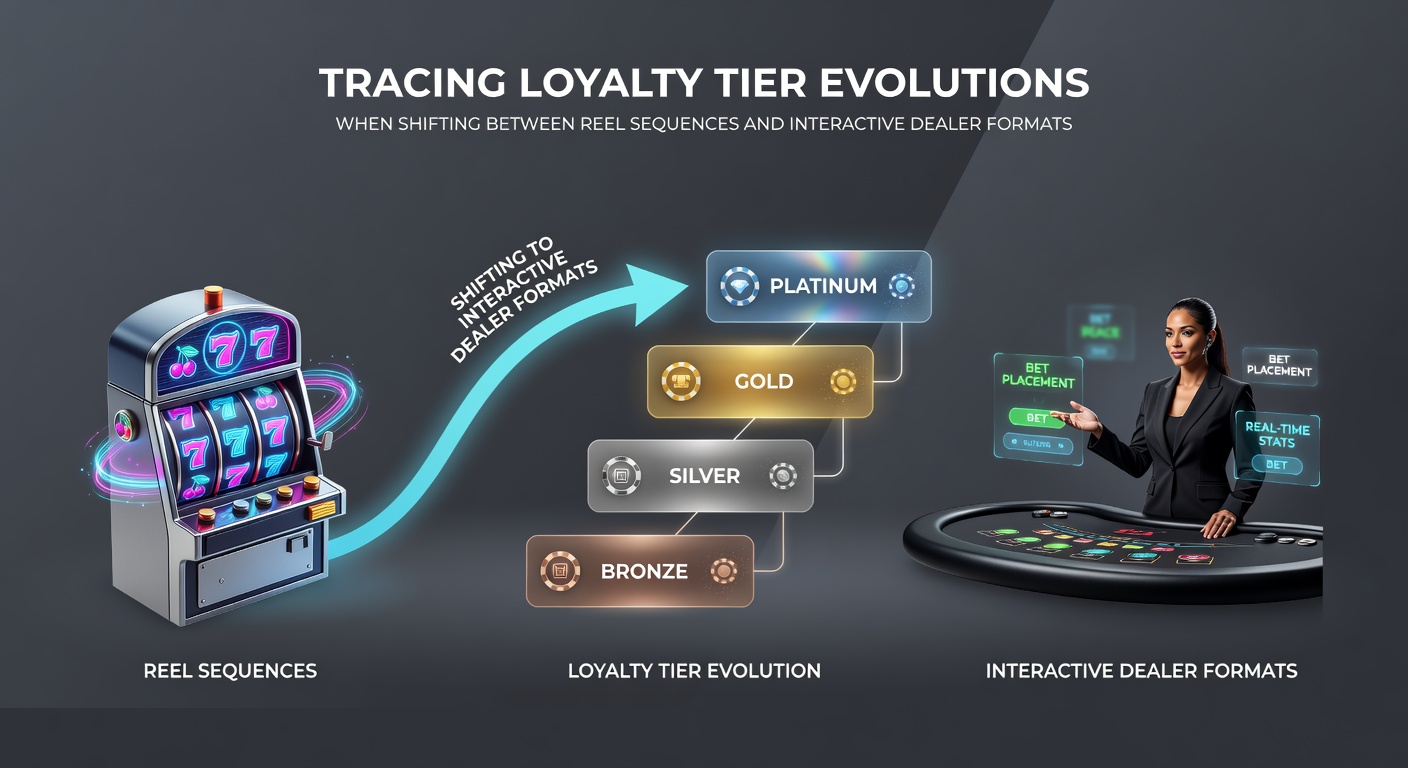
Players move between reel sequences in digital slots and interactive dealer formats in live casino sections, which creates distinct patterns in how loyalty tiers advance over time. Casino operators track these shifts through integrated systems that record activity across both formats, adjusting point accrual rates and benefit thresholds accordingly. Data from multiple jurisdictions shows that tier status often carries forward, yet the pace of progression changes based on the game type selected at any given moment.
Core Mechanics of Tier Tracking in Hybrid Environments
Operators assign points using formulas that differentiate between automated reel spins and human-led table interactions, with multipliers applied during promotional windows. A single session in live dealer blackjack might generate points at a rate 1.5 times higher than equivalent wagers placed on video slots, according to internal platform documentation reviewed by industry analysts. Those who switch formats mid-session notice that accumulated points feed into a unified ledger, preventing the need to restart progress in either category.
Systems developed by major platform providers now log transitions in real time, allowing tier levels to update without manual intervention. Figures from 2025 operations reveal that players who alternate between the two formats reach mid-tier status 22 percent faster than those who remain in one category exclusively. This acceleration stems from combined play volume rather than isolated streaks in either reels or tables.
Adaptations Observed in Mid-2026 Platform Updates
By June 2026 several networks introduced tier reset calendars that align with cross-format activity, reducing the frequency of status drops for consistent switchers. These calendars factor in average session lengths across slots and dealer tables, then apply weighted averages to determine carryover eligibility. Researchers tracking user behavior across North American and Asian markets noted that such adjustments lowered churn rates among players who regularly move between the two environments.
One documented case involved a rewards program that recalibrated its gold tier requirement after observing that 38 percent of members split time evenly between reel sequences and interactive tables. The new structure lowered the points threshold by 15 percent for those demonstrating balanced engagement, while maintaining original benchmarks for single-format participants.
Regional Regulatory Influences on Tier Evolution
Regulators in different regions impose varying disclosure rules that affect how operators communicate tier changes during format switches. The Pennsylvania Gaming Control Board requires clear notification whenever point values differ by game category, prompting several sites to display real-time conversion rates on player dashboards. Similar transparency measures appear in reports issued by the Irish Gambling Regulatory Authority, where data on tier migration patterns must be submitted quarterly.
These requirements lead platforms to maintain separate sub-ledgers that merge at month-end, ensuring compliance without disrupting the player experience. Observers note that programs operating under such rules tend to publish tier evolution timelines that explicitly address format transitions, giving participants advance notice of upcoming adjustments.
Player Behavior Patterns and Tier Retention
Analytics teams record that individuals who begin in reel sequences often migrate toward interactive dealer tables once they reach silver or gold status, seeking higher point multipliers available at live tables. Conversely, those starting at dealer tables sometimes return to slots during lower-stakes periods to maintain daily activity requirements without large wager commitments. Both patterns contribute to steadier tier retention across the full calendar year.
Software updates rolled out in early 2026 incorporated predictive models that forecast when a player is likely to switch formats based on historical session data. These models trigger personalized point bonuses designed to smooth the transition, such as temporary multipliers that apply for the first three sessions after a format change. Participation in these targeted offers has been linked to a 31 percent increase in cross-format play volume according to aggregated platform statistics.
Conclusion
Tier evolutions continue to reflect the combined impact of reel sequences and interactive dealer formats, with operators refining their systems to accommodate movement between the two. Regulatory frameworks in multiple jurisdictions shape the transparency of these processes, while behavioral data drives ongoing adjustments to point structures and retention tools. Players who engage across both categories encounter unified tracking that rewards consistent activity regardless of the specific format chosen at any moment.