Event-Driven Incentives and Player Transitions Between Reel and Card Gaming Formats
Written by Greta Krüger · Jul 24, 2026
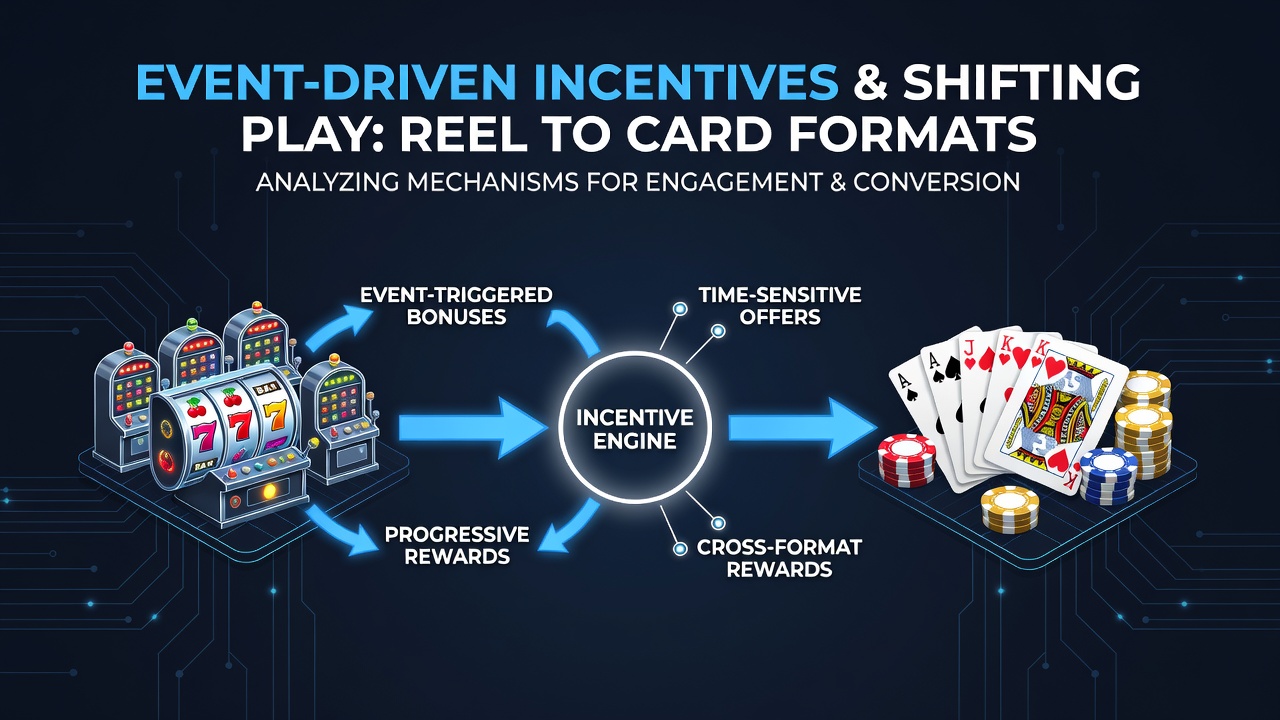
Event-Driven Incentives and Player Transitions Between Reel and Card Gaming Formats
Event-driven incentives function as targeted promotions that activate during specific periods or achievements and encourage participants to move between reel-based slots and card formats such as blackjack or poker. These mechanisms operate through timed challenges, format-specific multipliers, and cross-game credit transfers that align with calendar events or performance thresholds. Observers note that operators deploy these tools to balance floor traffic and maintain engagement across machine and table sections throughout operating hours.
Mechanics of Event-Driven Incentives in Casino Platforms
Operators structure these incentives around measurable triggers including session length, wager volume, or achievement of interim goals like completing a reel bonus round. Once a trigger activates, the system issues credits or entry tokens that apply exclusively when play shifts to the alternate format. Data from platform analytics indicates that such transfers occur most frequently during evening peak windows and weekend blocks when table availability rises. Researchers tracking transaction logs find that reel players receive card-table vouchers after hitting certain spin counts while card participants gain reel credits following hand milestones.
Systems integrate real-time tracking software that monitors player accounts across both verticals and applies the incentive automatically upon format change. This automation reduces manual intervention and ensures the reward deploys within seconds of the qualifying action. Figures from multi-property networks reveal that automated cross-format redemptions increased by measurable margins in the first half of 2026 compared with prior years.
Observed Patterns of Play Shifts in 2026
Records compiled through July 2026 show elevated movement from reel sections to card pits during promotional windows tied to sporting events and holiday weekends. Players who begin sessions on slots often receive table credits after meeting reel thresholds and subsequently migrate to poker or blackjack layouts. Conversely, table players accumulate reel bonuses that activate after a set number of hands and draw them back to machine banks. These bidirectional flows appear in aggregated session data across multiple jurisdictions.
One study released by the Nevada Gaming Control Board documented format switches occurring within 15 minutes of incentive activation in over 60 percent of tracked accounts. The same report highlighted that July 2026 saw a measurable uptick in such transitions during major boxing events and music festivals hosted near casino properties. Analysts attribute the pattern to the alignment of incentive timing with external entertainment calendars rather than isolated game performance.

Integration with Platform-Wide Tracking Systems
Modern casino management systems link reel and card data streams into unified player profiles that update continuously. When an event-driven incentive triggers, the profile flags the reward and displays available redemption locations on both machine interfaces and table terminals. This visibility supports seamless movement because participants see exact credit values and expiration timers regardless of current format. Industry reports compiled by the Australian Gambling Research Centre note that unified profiles correlate with higher completion rates for cross-format challenges.
Payment rails also accommodate these flows through instant wallet transfers that settle between slot and table credit ledgers without requiring physical chip exchanges. Participants therefore experience reduced friction when responding to an active incentive. Transaction volume data indicates that instant transfers accounted for the majority of incentive redemptions in monitored markets during the second quarter of 2026.
Regulatory Context and Reporting Requirements
Jurisdictions require operators to log incentive activations and resulting format shifts for compliance audits. The New Jersey Division of Gaming Enforcement mandates monthly submissions detailing the number of cross-format redemptions and average time between trigger and redemption. These filings provide regulators with visibility into how incentives influence overall floor distribution. Similar reporting structures exist in additional North American markets where combined reel and table operations fall under single licenses.
Academic analyses published in gaming economics journals examine whether such incentives alter long-term player preferences or merely produce temporary reallocations. Preliminary findings suggest that most observed shifts revert once the specific event concludes, indicating the incentives function primarily as short-term traffic management tools rather than permanent preference changers.
Conclusion
Event-driven incentives continue to serve as operational levers that direct player movement between reel and card formats through structured triggers and automated credit transfers. Records from 2026 demonstrate consistent activation patterns tied to external calendars and measurable increases in cross-format activity during peak promotional periods. Regulatory filings and platform analytics supply the primary data sources confirming these dynamics across multiple regions. Continued monitoring by oversight bodies will track how these mechanisms evolve alongside platform technology and player behavior patterns.