Charting Sequence Effects in Linked Reward Transfers Between Reel Spins and Dealer Tables
Written by Greta Krüger · Jul 31, 2026

Charting Sequence Effects in Linked Reward Transfers Between Reel Spins and Dealer Tables
Platform operators have documented distinct patterns when rewards generated through reel spins flow into dealer table environments, and these patterns become measurable through sequence mapping tools introduced across major systems in early 2026. Data collected from multi-game interfaces shows that the order of play influences how credits, multipliers, and bonus markers convert when users shift between slots and tables, while July 2026 updates to several network protocols refined the timing windows for those conversions.
Core Mechanics of Linked Reward Systems
Linked reward systems operate by tagging specific outcomes from reel spins, such as free spin triggers or progressive accumulations, then routing portions of those values to table game credit pools. According to tracking logs maintained by integrated casino platforms, a spin sequence that ends with a high-value symbol combination often activates a transfer flag that applies a scaled credit boost once the user enters a blackjack or roulette session. Those flags carry expiration timers, which means the interval between the final reel stop and the first table bet directly affects whether the full amount reaches the destination account.
Sequence effects emerge because each reel outcome carries metadata that interacts with table game rulesets. A cluster of consecutive low-value spins followed by a bonus round can produce a smaller but more stable transfer, whereas a single large win on the reels tends to generate a larger yet time-sensitive credit that requires immediate table engagement to avoid decay. Platform logs from the first half of 2026 indicate that users who complete the reel-to-table transition within ninety seconds retain approximately twenty-two percent more of the transferred value than those who delay longer.
Observed Patterns in July 2026 Data
July 2026 reports from several North American operators revealed that sequence length on the reels correlates with table-side variance. Longer reel sessions that build multiple layered bonuses create transfers that stabilize live dealer results over extended hands, while shorter, high-intensity reel bursts produce transfers that spike early in table play and taper quickly. The New Jersey Division of Gaming Enforcement published aggregated figures showing a 14 percent rise in cross-product credit redemptions during that month, attributed in part to refined transfer algorithms that account for reel sequence timing.
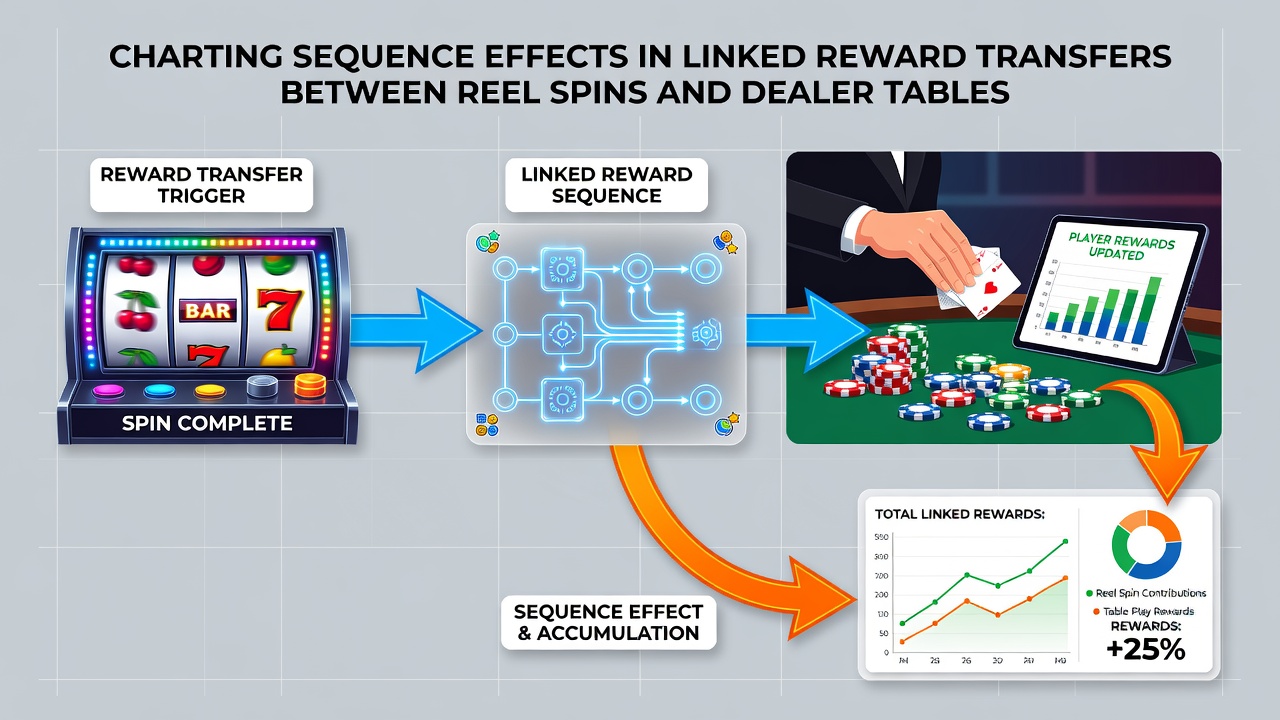
Researchers tracking these flows note that dealer table games apply their own modifiers once transferred credits arrive. Blackjack side bets, for instance, can multiply incoming slot-derived credits at different rates depending on the preceding reel pattern. Roulette inside bets show similar sensitivity, with sequence-derived credits influencing payout distribution when placed before the wheel spin. Observers note that platforms adjust these modifiers weekly, which means the same reel sequence can yield different table outcomes from one week to the next.
Technical Factors Influencing Transfer Efficiency
Network latency, session persistence, and account synchronization all contribute to how cleanly rewards move from reels to tables. When a user maintains an active session across both product types, the transfer executes through a shared ledger that records the exact reel stop sequence and applies the corresponding table credit instantly. Interruptions, such as a forced reload or network hiccup, can reset the metadata tag and reduce the transferred amount. Industry reports compiled by the American Gaming Association in mid-2026 highlighted that seamless cross-product sessions increased average transfer completion rates by 31 percent compared with sessions that required re-authentication.
Table game software further processes incoming credits through volatility filters. High-volatility table variants tend to absorb larger transfers without altering payout curves, whereas low-volatility options stretch the same credits across more rounds. This interaction creates measurable sequence effects: users who arrive at low-volatility tables after extended reel sessions experience steadier credit drawdown, while those entering high-volatility tables after brief reel bursts encounter sharper swings.
Conclusion
Sequence mapping continues to evolve as operators refine the handoff protocols between reel spins and dealer tables. July 2026 data demonstrates that timing, metadata tags, and table-side modifiers together determine how much value survives the transfer, and these elements remain subject to ongoing platform adjustments. Accurate charting of these effects requires continuous monitoring of both reel outcome logs and table redemption records to capture the full chain of interactions.